How a Drug Crimes Defense Attorney Challenges Prosecution Evidence
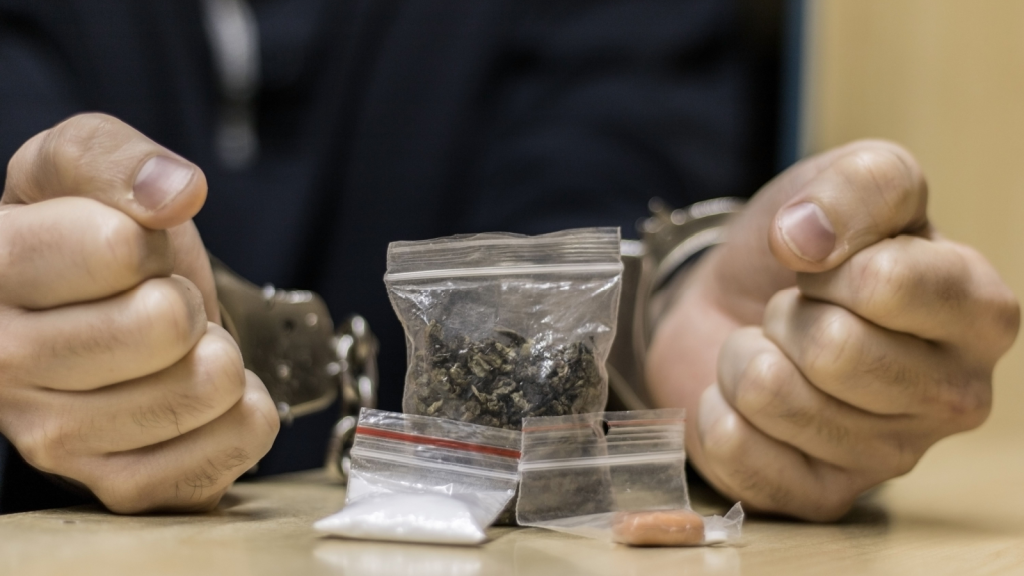
Freedom and reputation, along with future opportunities, can be affected by drug charges. Evidence establishing the facts of an allegation must meet the legal requirements, and every aspect counts. Drug Crimes Defense Attorney can review the methods police used in the search, retrieval of suspected drugs, laboratory testing of suspected drugs, and interviewing the accused. Knowing the weaknesses in the prosecution’s case can help you to ensure your rights are protected and an appropriate defense strategy developed.
The process of a Drug Crime Prosecutor
In a prosecution for a drug offence, it is evidence that supports the prosecution’s case that a drug offense was committed. Common pieces of evidence are suspected controlled substances, police reports, witness statements, surveillance video, electronic communications, and laboratory results. But the possession of drugs does not constitute criminal liability. The prosecution has to establish the elements of the crime. These may include possession, knowledge, intent, or suspected involvement in the selling or distributing of illegal drugs.
Drug Crimes Defense Attorney will analyze the evidence to determine if there is evidence that supports the claims. This review may result in the discovery of inconsistencies, lack of information, unreliable findings, or constitutional violations.
Researching and judging the legality of the Search and Seizure process
No one’s right to privacy should be violated by an unreasonable search and seizure. During a Drug Offense Search, a police officer must adhere to the Constitution when searching a vehicle, home, or any other protected property when they believe that a drug offense has occurred. In some cases, they might need a valid permit or legal exception.
The attorney for the defense will examine the search and determine if the police had permission to search.
Reviewing Search Warrants
If the officers had the warrant, the defense can check to see if there was enough probable cause for the warrant, and if the search was conducted within the scope of the warrant. The Drug Crimes Defense Attorney’s role is also to look to see if the information that was provided to the warrant was correct and if officers followed the warrant.
Searches Without Warrant
There are some circumstances in which the police may search without a warrant. But the lawfulness of these searches will vary with the facts and law. There may be different legal requirements involved with different types of searches, such as vehicle searches, consent searches, and searches related to arrest. A Drug Crimes Defense Attorney considers if there was a proper exception and whether consent was obtained.
Seeking to Exclude Illegally Obtained Evidence
A motion to suppress the evidence could be filed if a search breached the Constitution. In some cases and under some legal principles, the motion might also allege that other evidence was the fruit of the tainted harvest. Automation of suppression is not possible. The court considers the same factors as those considered in deciding any other case before deciding the admissibility of evidence at trial.
The question of accuracy of drug testing will be raised. Lab testing is often a key element in Drug Charges. The result of a forensic examination may corroborate identification of a substance and associate it with a suspected crime. But a great deal of well-done lab results rely on proper testing techniques, working equipment, good records, and competent personnel. A Drug Crimes Defense Attorney will be able to review laboratory reports and other records to determine the reliability of the scientific evidence.
Examining Laboratory Procedures
The defense can find out what tests were performed, if they were the proper tests, and if the lab has followed standard procedures. A review of equipment calibration, sample preparation, possible contamination, and interpretation of the results may be warranted.
However, the results of a screening test in the field may not agree with the results of a confirmatory test in the laboratory. The meaning of either of these results will be determined by the method used and the conditions of the case.
Chain of Custody is subject to analysis.
A chain of custody is a document that outlines the evidence collection, evidence labeling, evidence storage, transfer of evidence, and testing. Records can be incomplete, or procedures might not be uniform, and it could raise doubts about whether the substance submitted for testing was the same as the one the police seized. Documentary errors do not necessarily result in exclusion of evidence. But there could be major inconsistencies that undermine the credibility of prosecution findings, or that give reason for questioning the evidence.
Qualified Forensic Testimony
If needed, the defense can obtain an opinion from a qualified forensic professional to review the prosecution’s approach and results of testing. A separate analysis might be useful to determine scientific limitations, alternative explanations, or errors that warrant further review.
The goal is to root out the false allegations and not simply take at face value what is reported.
Disputing Possession and Intent Claims
Simply being in proximity to a controlled substance does not mean one has possession of it. In several Drug Offenses, the prosecution is required to establish certain elements of the law,w such as knowledge and control. A Drug Crimes Defense Attorney reviews the facts to see if the prosecution can prove the accused knowingly possessed the drugs or substance.
Possession – actual and constructive.
Actual possession is possession of a substance that is normally on a person. Constructive possession can include scenarios where an individual is said to know the presence of a substance and can control it, but not actually possess it. For instance, if drugs are found in a vehicle or home, those drugs may not belong to all who are in the car or home. The defense has access to the evidence, which includes ownership records, access, fingerprints, communications, and witness statements, to see if there’s any evidence of the alleged connection.
Defending Allegations of Intent to Distribute
Possession and distribution penalties vary greatly. Packaging materials, scales, cash, electronic communications, or the amount of a substance were among the items formerly thought to be evidence of an intent to distribute. A Drug Crimes Defense Attorney looks at how these circumstances actually do or do not fit with the allegation or if there are reasonable alternative explanations. Some things do not necessarily prove that they were intended for certain uses. The prosecution still has to establish the elements of the crime to which the defendant has been charged.
Challenging Witness Evidence
Witness statements can sway a jury’s perception of a drug investigation. Police officers, confidential informants, alleged participants,s and other witnesses can give details of the events. Their claims should be revisited based on the evidence. A Criminal Lawyer can spot the discrepancies in what is written in police reports, recorded interviews, body-camera footage, surveillance videos, and courtroom testimony. Cross-examination may explore a witness’s ability to observe events, memory, prior inconsistent statements, ts and potential motivation to testify falsely.
For instance, a co-operating witness can receive or expect some benefit for the prosecution’s help. Such situations could be significant in assessing their credibility as witnesses. Typically, motions challenging evidence at trial are drafted in advance. There are some obvious cases of dispute that can be resolved prior to trial. Once the investigation is over, a Drug Crimes Defense Attorney will be able to review the investigation and file proper motions regarding the admissibility of evidence or clarification on legal matters.
This preparation can lead to uncovering any vulnerabilities in the prosecutor’s evidence and to make sure that the court is aware of the various legal safeguards.
How John R. Hill Law Manages Various Criminal Charges
The firm John R. Hill Law is a defense firm that defends people charged with crimes in Lebanon and Middle Tennessee. John Hill represents clients in various types of criminal defense cases such as Drug Charges, DUI/DWI charges, domestic violence allegations, and Violent Crime Cases.
However, when someone is charged with an Order of Protection or drug related charges or other criminal offenses it is vital to understand the legal options. The firm’s primary emphasis is on individualized care, case preparation, and reviewing case factors that could impact a defense.
People should seek out a Drug Crimes Defense Attorney, DUI / DWI Defense Attorney, or research the Best Criminal Lawyers in their case, taking into account the attorney’s experience with the charge in question and any methods he uses to look at evidence. A Criminal Lawyer can review the facts, discuss the consequences, and defense options.
Each criminal case has unique facts, evidence, and legal issues. John R. Hill Law can discuss the facts of an allegation and assist people in comprehending their rights and possible choices.
Conclusion
Accusations of drug offences should be judged on the evidence and not speculation. Searches, laboratory results, witness credibility, and possession appear to be just a few questions that can affect the direction of a case. A Drug Crimes Defense Attorney can assess for any weaknesses, discuss legal protections that may apply, and formulate a defense strategy in the situation. When you or a loved one is charged with drug possession or any other criminal offense in Middle Tennessee, give John R. Hill Law a call to discuss the charges and know what to expect next.
Frequently Asked Questions
1. How Can a Drug Crimes Defense Attorney Challenge Evidence?
The Drug Crimes Defense Attorney will be able to review the search, laboratory results, chain of custody, witness statements, and other evidence to look for inconsistencies and any violation of the law.
2. How Can An Illegal Police Search Impact A Drug Case?
Yes. If the evidence is acquired by an unconstitutional search, a defense lawyer could seek to exclude it. The court may do so if the circumstances and law deem it appropriate.
3. What are the Consequences of a Laboratory’s Error in Drug Testing?
Errors in tests can lead to doubts about the validity or acceptability of lab results. The defense will be able to examine testing processes, records of evidence, and the qualified professional opinion and consider the effects of any misconduct.
4. What if the Drugs weren’t mine?
Yes, charges can still be filed if substances are not in your possession. The prosecution, however, has to prove the elements, knowledge, and control. Proximity to drugs is not necessarily proof of possession.
5. When is the right time to call a Drug Crimes Defense Attorney?
As soon as you find out you have been investigated, arrested, or charged with drugs, consider hiring a drug crimes defense attorney. An attorney can help you safeguard your rights, analyze the evidence, and explore strategies for defense at the early stages.